
Sub-GHz Field Radio Flash Memory Scrubbing and Transmit Coexistence Mechanics
Hardware interlocks and erase-suspend routines decouple high-power sub-GHz RF bursts from flash scrubbing to prevent supply rail collapse and bit flips.

Hardware interlocks and erase-suspend routines decouple high-power sub-GHz RF bursts from flash scrubbing to prevent supply rail collapse and bit flips.

Cross-border insert disputes resolve by auditing unamortized core balances and executing bailment extraction clauses tied to factory gate escrow releases.

Autonomous memory patrol prevents high-temperature soft errors from compounding into uncorrectable faults by scrubbing memory arrays without CPU overhead.

Reconcile mechanical stroke tallies with machine PLC logs and physical pin wear before releasing final payments or signing mold transfer bills of lading.

Radio type approval in China demands accredited domestic chamber testing, strict sample hardware modification, and exact power spectral mask compliance.
Chinese radio type approval mandates accredited in-country testing and a CMIIT ID identifier before wireless products clear customs or retail distribution.

Resolving multi-transmitter intermodulation under revised Korean rules demands physical antenna separation, simultaneous-transmit scans, and host KC filings.
Host devices in South Korea require mandatory radiated spurious emission tests regardless of pre-certified module status to secure valid KC market entry.

Integrating a pre-certified radio module exempts host RF retesting only if antenna type, gain, and trace impedance remain unchanged; EMC registration is mandatory.

Specifying global catalog mold bases with standardized platens, pockets, and metallurgy guarantees tools transfer between international presses without remachining.

Dynamic frequency selection verification requires matching transceiver pulse discriminators to regional radar profiles and calibrating laboratory RF injection lines.

Enforce microcontroller credential ownership by isolating root secrets inside buyer-controlled hardware security modules and conditioning payment on test logs.

Secure unencrypted native design databases, universal tooling specifications, and bit-reproducible firmware repositories tied directly to staged milestone payouts.

Modular integration under the Korean Radio Waves Act demands host Registration of Conformity and full EMC testing despite certified RF modules.

Short range wireless device conformity requires matched test reports, accredited filings, clear modular boundaries, and precise housing labeling across target jurisdictions.

Cycling degrades tunnel oxide into defect pathways, lowering leakage activation energy from 1.1 eV to 0.4 eV and accelerating high-temperature charge loss.

Executing complete firmware source releases requires containerized deterministic build environments, complete board support packages, and clear IP assignment.
Flash qualification demands multi-temperature step-stress data because activation energy drops from 1.1 eV to 0.4 eV above 85 C.
Closing white-label radio approval gaps requires mandatory host-level radiated testing, unredacted technical files, and local legal agent appointments.

Automated toolchains synchronize PDK scripts and build rules across foundries to prevent hardware packaging drift and costly mask regeneration.

Lock module supplier permissive change filing obligations into master sourcing contracts to prevent production halts during host radio design modifications.

Thermal cycling lowers sub-22nm charge trap flash activation energy from 1.18 eV to 0.45 eV, reducing real-world 85°C retention from decades to months.
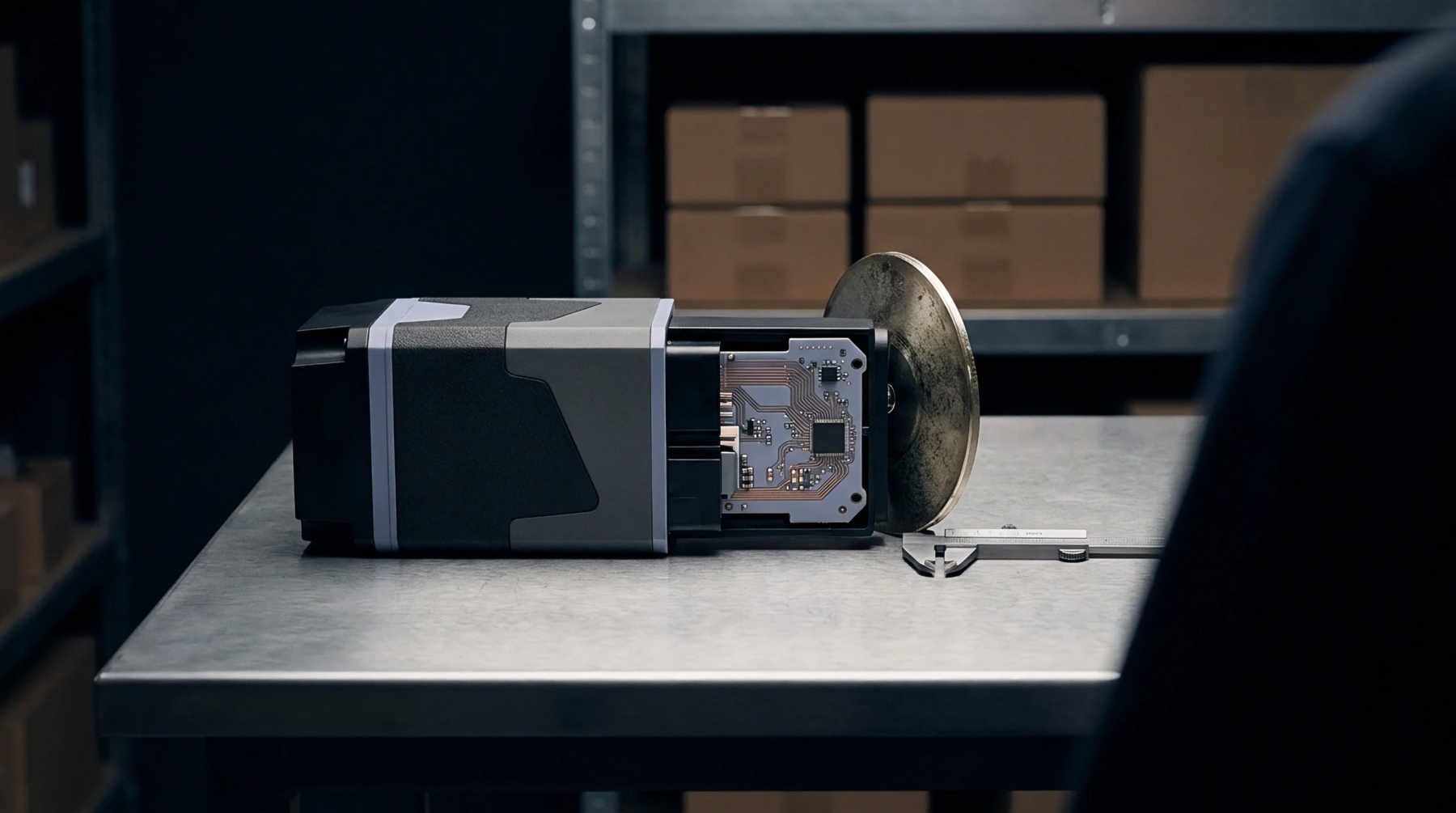
Decoupling board support packages requires separating silicon-specific register drivers from a uniform API shim to enable seamless dual-sourced PCB assembly.

A modular FCC grant covers only the standalone radio; host integrators remain legally liable for Part 15B testing, trace rules, and simultaneous emissions.

High heat accelerates thermionic emission and trap-assisted tunneling, flipping trim bits that degrade radio receiver sensitivity and break battery budgets.

Managing primary silicon SDK dependencies requires contractually binding suppliers to deliver open driver sources, build containers, and CVE patch SLAs.

Fixed milestone payments tie transceiver IP transfers to silicon DRC clean sign-off, bit-accurate testbenches, and calibrated evaluation hardware.

Firmware abstraction layers add measurable flash and latency overhead, requiring strict memory and execution budgets before committing to dual-vendor transceivers.

Modem footprint migration demands co-planar ground stitching, stepped stencils for void reduction, and transient decoupling to prevent logic resets.

A dual-sourcing transfer dossier must couple native CAD data and stencil apertures to unified test firmware to prevent process drift between factories.
Expertise is a utility, not a secret. sentiention™ publishes its working knowledge as open reference: intelligence layer covering the materials it sources, the markets it enters, and the reference that serves both.