
Buying a Ready Module against Building a Custom One
Selecting between ready modules and custom builds requires balancing upfront non-recurring costs and regulatory testing against long-term serial unit margins.
Selecting between ready modules and custom builds requires balancing upfront non-recurring costs and regulatory testing against long-term serial unit margins.

Crossborder measurement tooling requalification downtime liability requires explicit contractual liquidated damage terms backed by transit environmental logs.

Design transfer success depends on complete native CAD files, containerized firmware builds, unambiguous test specs, and explicit commercial exit clauses.
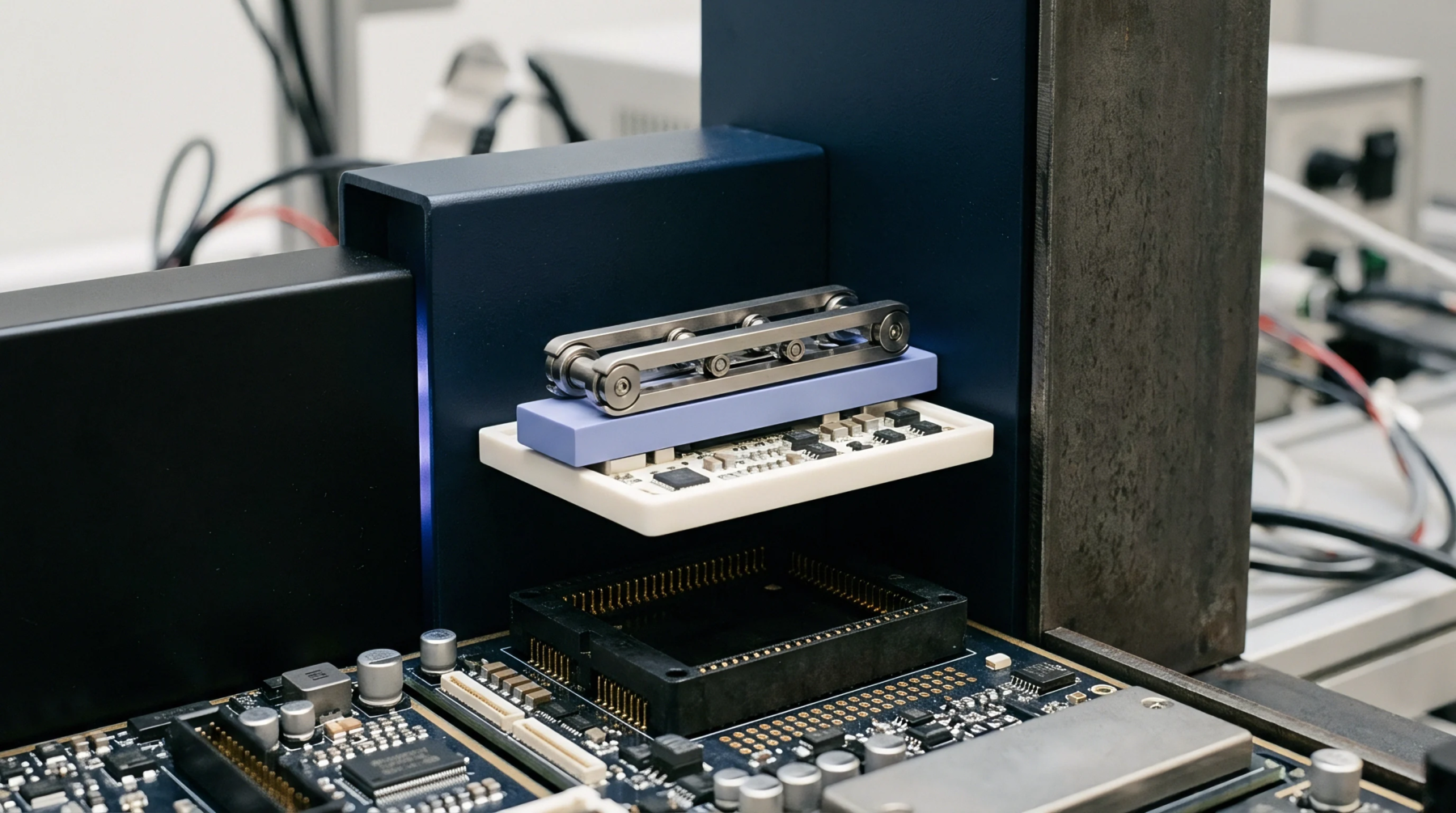
Post-production changes require locked baseline dossiers, physical rework verification under IPC standards, and strict serial number tracking to prevent line escapes.

Evaluating dual source transfer packages requires auditing source documentation completeness, matching physical substrate parameters, and tracking landed costs.

Long term landed cost models for dual sourced hardware must account for localized BOM markups, transit carrying charges, labor tact times, and duty rules.
Value design transfer packages by auditing native CAD and firmware source completeness against secondary bring-up friction and NPV returns.
Automated inspection system acceptance hinges on partitioning sensor variance from part variance through rigorous gage repeatability and guardband verification.

Liquidated damage allocations for optical inspection failures require multi-tiered downtime formulas backed by cryptographic system logs to withstand cross-border enforceability challenges.

Dual site binary blob integration relies on deterministic checksum gating, synchronized flash partition maps, and hardware security module key isolation across lines.

Lock bills of materials contractually and require automated feeder verification to eliminate unannounced component substitutions in turnkey electronics sourcing.

Electronic labeling eliminates physical marking on the chassis only when menu paths take under four clicks and packaging carries complete transit identifiers.
Transfer circuit files using IPC-2581 or Gerber X2 with IPC-D-356 netlists to ensure automated CAD validation and prevent assembly errors.

Post-production change control requires frozen revision baselines, strict PCN risk classification, delta testing, and explicit contractual cost allocation.

Commercial recovery for post-production hardware rework in multi-source supply chains hinges on contractual root-cause attribution and automated debit offsets.

Recalibrate SMT control baselines after verified physical line stabilization to isolate assignable mechanical wear from true common-cause variance.

Amortizing non-recurring engineering fees hides volume risk, while secondary supplier setup demands complete native design files and independent test jig duplication.

Splitting manufacturing allocations causes yield divergence from stencil, reflow, and ATE variances, driving landed cost premiums up through scrap and NRE.

Base foreign manufacturing costs hinge on automated machine cycle times, localized substrate procurement, and tariff transformation rules rather than labor rates.

Asset valuation baselines for electronics design transfers require native ECAD databases, uncompiled firmware source trees, and audited factory test tooling.
Turnkey sourcing assigns total design and assembly liability to suppliers; semi-custom sourcing splits exposure, assigning custom layout, thermal, and firmware risks directly to buyers.
Maintain a 70/30 production split with strict monthly minimum volume floors to preserve secondary line yields and protect against idle overhead surcharges.

Yield-adjusted reallocation re-routes components based on real-time defect rates, matching component bin tolerances directly to assembly line density requirements.

Cross-border downtime penalties require explicit hourly tariffs, defined telemetry boundaries, and alignment with local foreign exchange rules to survive legal challenges.

Clear intellectual property boundaries require explicit deliverable specifications for raw CAD source files, firmware build scripts, and test fixture designs.

Structure turnkey agreements with mandatory PCN windows, escrowed native design files, capped respin NRE, and explicit component storage liabilities.

Locking turnkey bills of materials requires cryptographic file hashing, explicit manufacturer part numbers, and strict contractually enforced engineering change approval protocols.
Automate factory scrap reconciliation by linking assembly line discard scans directly to certificate revocation endpoints before final product packaging.

Establishing HSM enclosures on SMT lines requires strict Z-axis force caps, outgassing vents, and air-gapped key injection to prevent bricking.

Gerber X2 embeds layer functions, drill spans, and component centroids directly into CAD headers, eliminating manual CAM interpretation and engineering queries
Expertise is a utility, not a secret. sentiention™ publishes its working knowledge as open reference: intelligence layer covering the materials it sources, the markets it enters, and the reference that serves both.