
Dual Site Secure Boot Flashing Infrastructure Integration within Tier One Assembly Lines
Inline secure boot flashing demands localized hardware security modules and Quad SPI interfaces to preserve automotive takt times across dual assembly plants.

Inline secure boot flashing demands localized hardware security modules and Quad SPI interfaces to preserve automotive takt times across dual assembly plants.
Dynamic Doppler dephasing collapses multi-user beamforming nulls; sustaining capacity requires rapid channel sounding or midamble tracking within coherence limits.
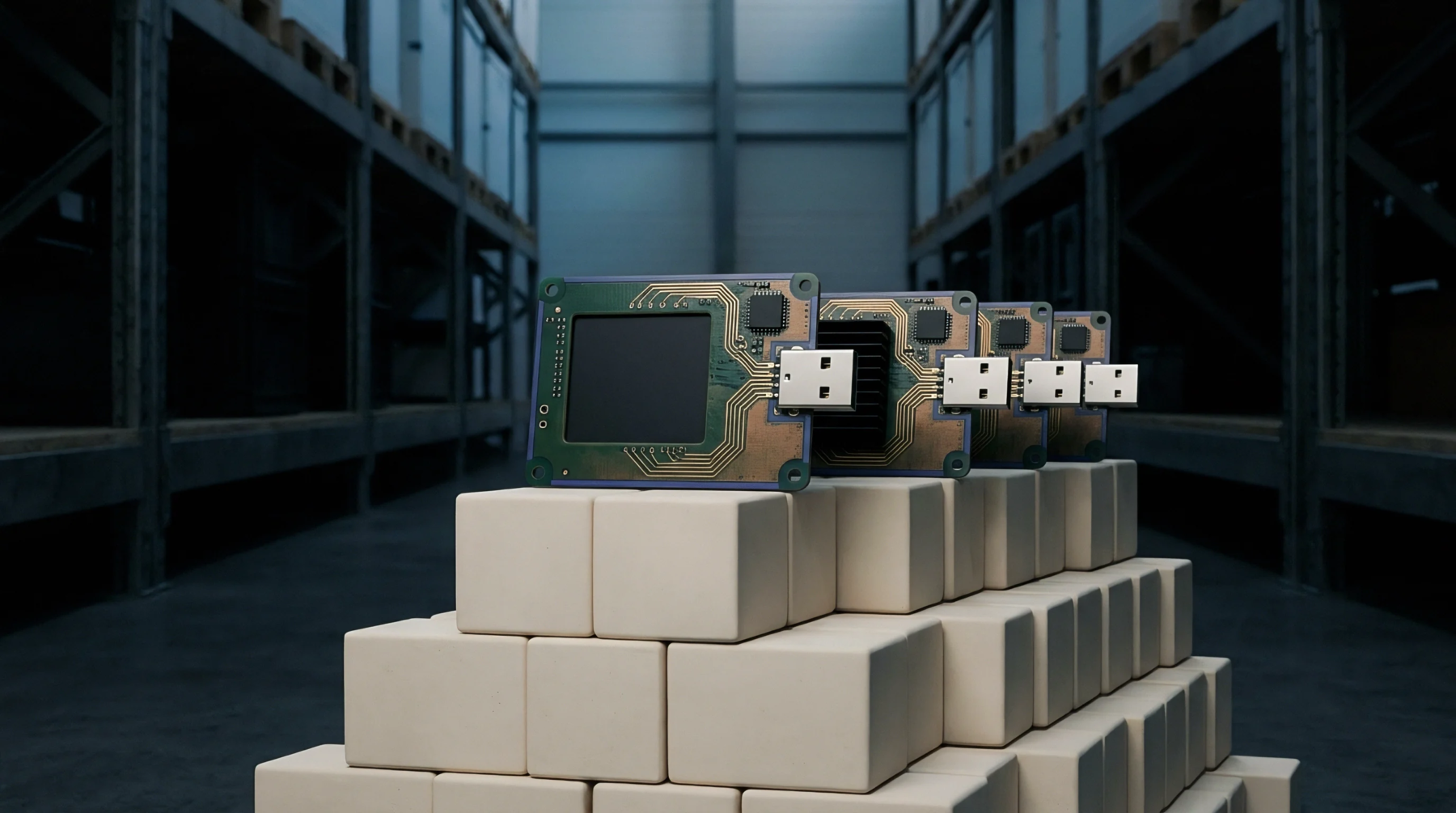
Secondary factory qualification requires exact memory partition mapping, programmer timing validation, and cryptographic attestation for closed binary blobs.

Dielectric variation in automotive fascias degrades radar beam coherence and risks regulatory non-compliance under FCC and ETSI type approval rules.

Characterizing thermal dielectric relaxation in anisotropic W band polymers prevents beam squint and out-of-band emissions during regulatory approvals.

Quasi-optical permittivity extraction isolates radome dielectric constants at 77 GHz to avert regulatory transmission failures before bumper tooling commits.

W band free-space polymer testing requires quarter-wave sample geometries and spot-focused quasi-optics to prevent invalidating automotive radar type approvals.
Dynamic CSI feedback interval scaling reduces sounding airtime overhead by up to 22 percent while maintaining optimal multi-user beamforming spatial gains.

Sounding overhead consumes up to 35 percent of channel airtime, requiring strict bench measurement of quantization sizes and coherence decay limits.
Resolve SGP.32 roaming latency by enforcing client-side RSRP download gating, deploying DTLS session resumption, and truncating profile ASN.1 payload size.
Dynamic band masking, motion-qualified retries, and Release Assistance Indication cut cross-border tracker re-selection current draw by over eighty percent.

Cross-border cellular tracker protocol selection requires balancing sub-GHz link budget penetration against multi-region operator roaming agreements and deep-sleep energy limits.
Rigorous auditing of wireless host technical construction files bridges modular approval gaps through empirical spot-checks, layout checks, and trace audits.
Co-locating dual transmitters within 20cm triggers mandatory radiated intermodulation testing and invalidates standalone modular grants across all major markets.
Near-field potting loading shifts antenna resonance up to 40 MHz, demanding fully meshed 3D co-simulation to prevent catastrophic link budget collapse.
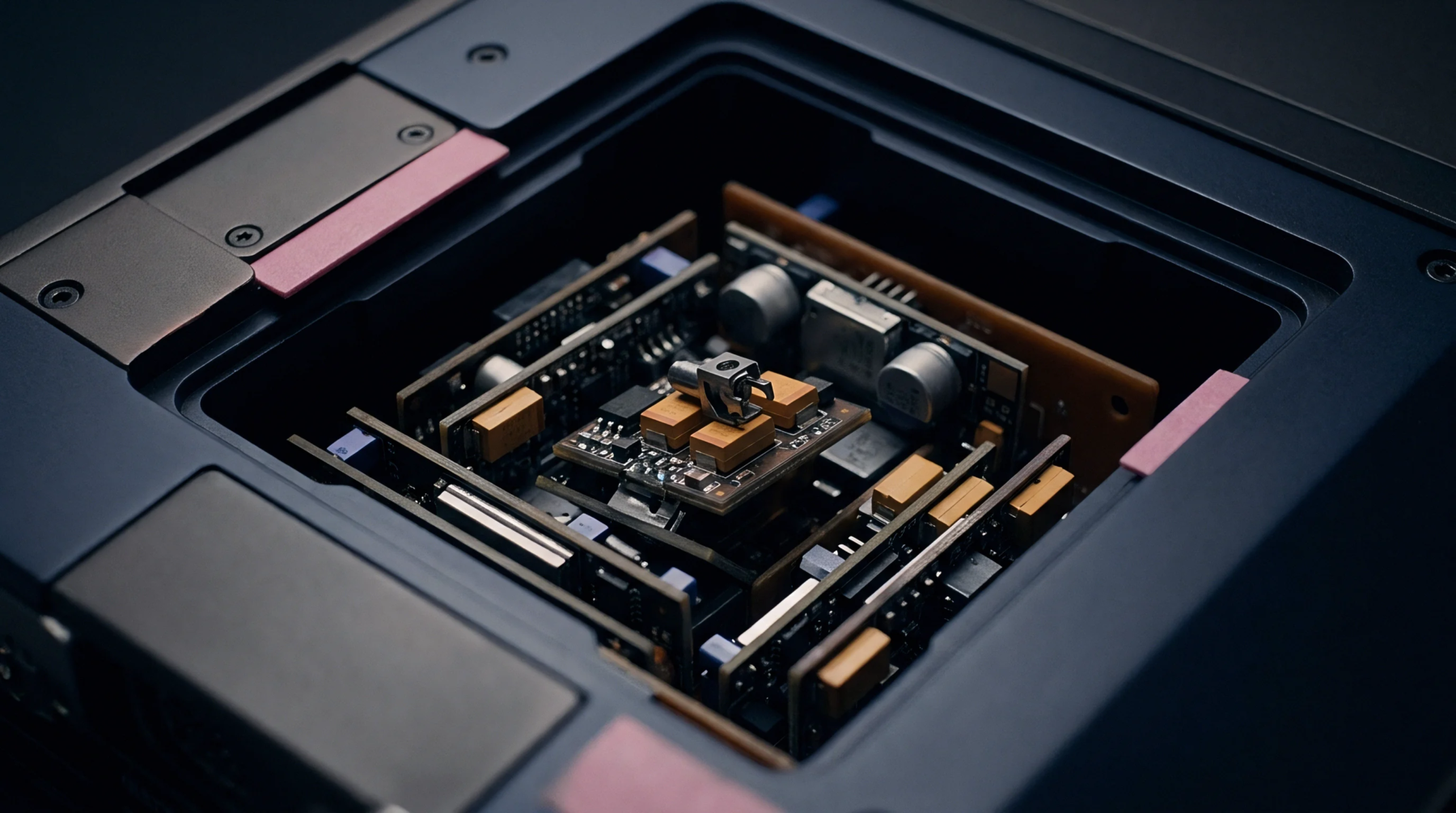
Modular radio approvals cover transmitter components alone, forcing host manufacturers to perform radiated testing and execute distinct country filings.
Truncating PCB ground planes collapses antenna radiation resistance, creates deep directional nulls, and forces RF return currents into noisy peripheral traces.

Exceeding radiated spurious limits or specific absorption rate thresholds under close antenna co-location mandates a formal Class II Permissive Change filing.

Managing orthogonal thermal strain mismatch requires matching material expansion axes and using kinematic flexures to decouple multi-axis stress.
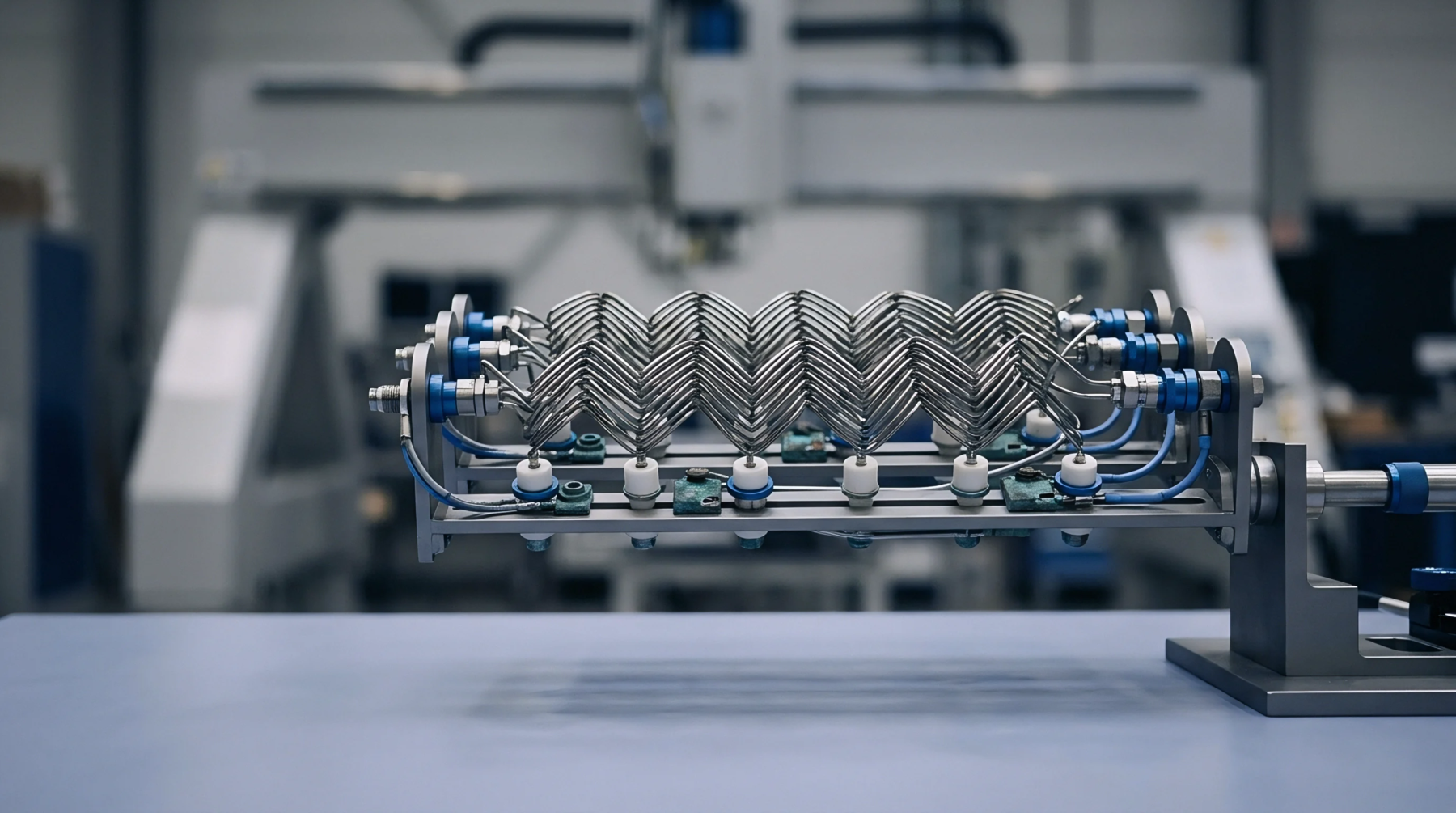
Quantifying phase stability and creep life requires coupled CALPHAD modeling, tight master heat revert limits, and sacrificial stress-rupture qualification.

Radiated spot checking verifies that host chassis interactions and multi-radio mixing do not violate baseline modular grant emission limits.

Cast tooling plate secures isotropic thermal expansion and zero out-of-plane warp by trading off structural yield strength and vacuum integrity.

Cryptographic build hash verification failures occur when environmental variations across CI nodes inject host paths and timestamps into compiled binaries.

Automated software verification isolates physical register and timing deltas across dual-sourced RF boards before volume production begins.
Hermetic build container escrow guarantees bit-for-bit firmware reproducibility and independent hardware maintenance across extended production lifecycles.
Enclosure plastics lower antenna resonance via dielectric loading, degrading impedance matching and radiation efficiency unless tuned inside the final housing.
Dynamic battery impedance causes severe transient voltage drops during receiver pulses, requiring calibrated capacitance to prevent MCU brownout resets.

Decouple proprietary firmware via hardware abstraction layers while tying silicon stepping liabilities directly to unescrowed supply agreements.
Clock drift expands sleepy end device polling windows linearly, turning microampere sleep gains into costly active receiver drain without tight timing hardware.
Initial Zigbee channel scanning expends substantial battery capacity by forcing receivers into continuous high-current listening across multiple frequencies.
Expertise is a utility, not a secret. sentiention™ publishes its working knowledge as open reference: intelligence layer covering the materials it sources, the markets it enters, and the reference that serves both.