
Estimating Coordinator Memory Exhaustion during Large Scale Mesh Node Provisioning
Provisioner memory exhaustion during large mesh commissioning is prevented by sizing SRAM to hold concurrent DTLS context peaks plus routing table expansion

Provisioner memory exhaustion during large mesh commissioning is prevented by sizing SRAM to hold concurrent DTLS context peaks plus routing table expansion

Effective multi-market RF qualification requires pricing laboratory measurement variance and host integration failure risks directly into contingency budgets.

A test fixture statement of work must specify pin contact physics, calibration traceability, measurement uncertainty budgets, and native design deliverables.

Radio certification success requires four dedicated samples, continuous-wave firmware, certified anechoic site validation, and rigid host integration controls.

Cross-border eUICC reliability depends on host-managed exponential backoff timers, FPLMN cache management, and local offline profile switching rules.

Schematic handovers before NRE release require full native CAD project files, netlists, and manufacturing data verified on the bench prior to invoice authorization.

Maintaining transferred firmware repositories requires containerized build environments, physical testing rigs, and explicit SLAs to allocate silicon errata costs.

Exceeding sub-GHz statutory duty cycles requires hybrid dual-radio architectures that trigger high-speed cellular or Wi-Fi offloads for high-frequency telemetry.

Dynamic volume splitting balances supply risk by adjusting dual-hardware manufacturing quotas based on real-time factory yields, quality limits, and tooling amortisation floors.
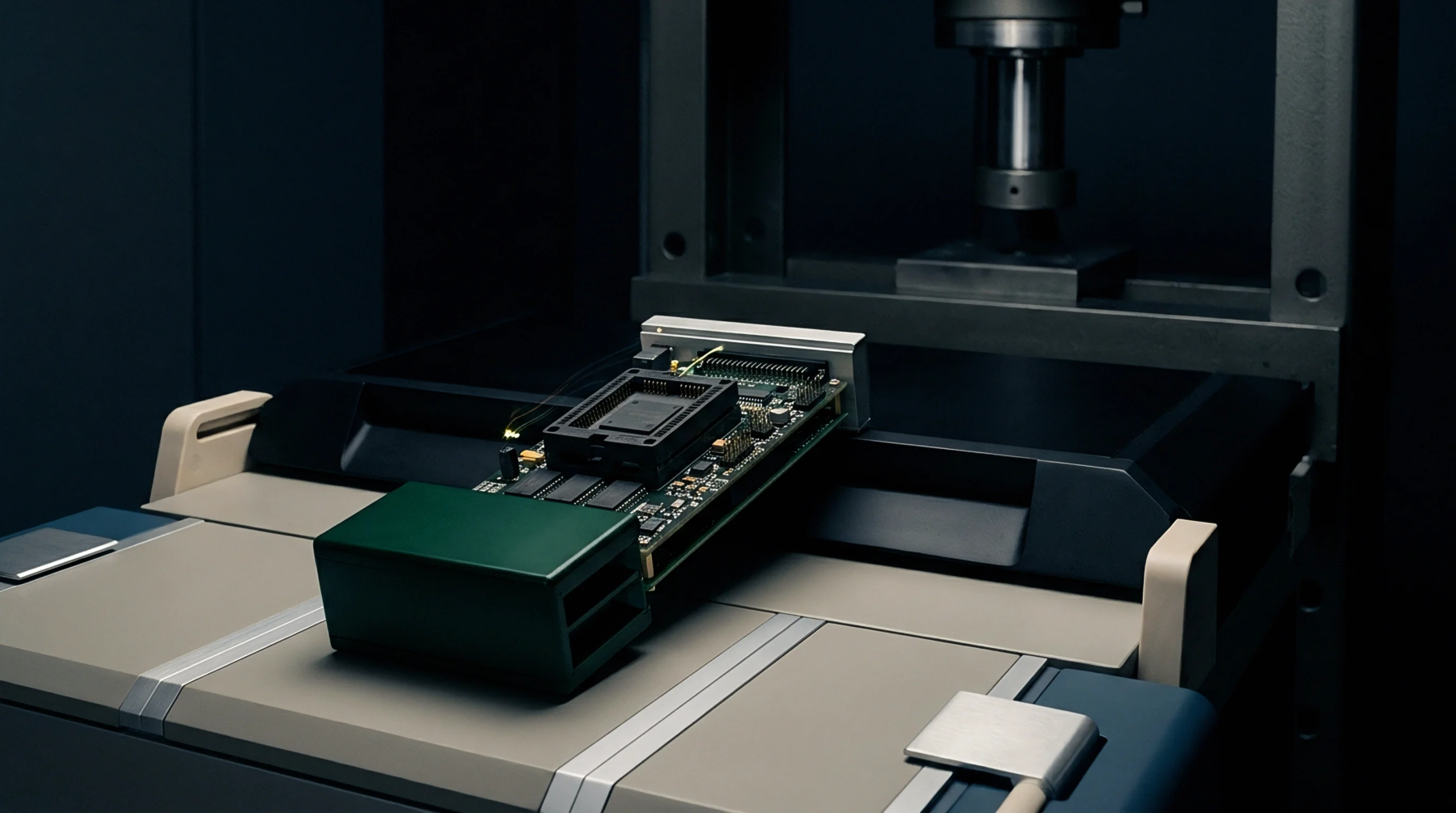
Mechanical preload across socket micro asperities defines insertion loss stability and constriction resistance in millimeter wave automated device testing.

Compensate laser tracker atmospheric error using Edlen index calculations, distributed sensor arrays, and line-integral math to eliminate scale bias.

Cellular IoT session rounding increments can multiply billable data volumes by twenty times, turning raw sensor updates into severe monthly carrier overage charges.

Ground allocation distributes warranty liability across hardware tiers based on integration depth, physical root cause, and explicit contract caps.

Modifications to encapsulated radio modules require Class II permissive change filings whenever conducted power increases or radiated emissions degrade.

Silicon die shrinks accelerate output driver edge rates and elevate parasitic inductance, requiring full signal integrity auditing and updated IBIS models before drop-in assembly signoff.
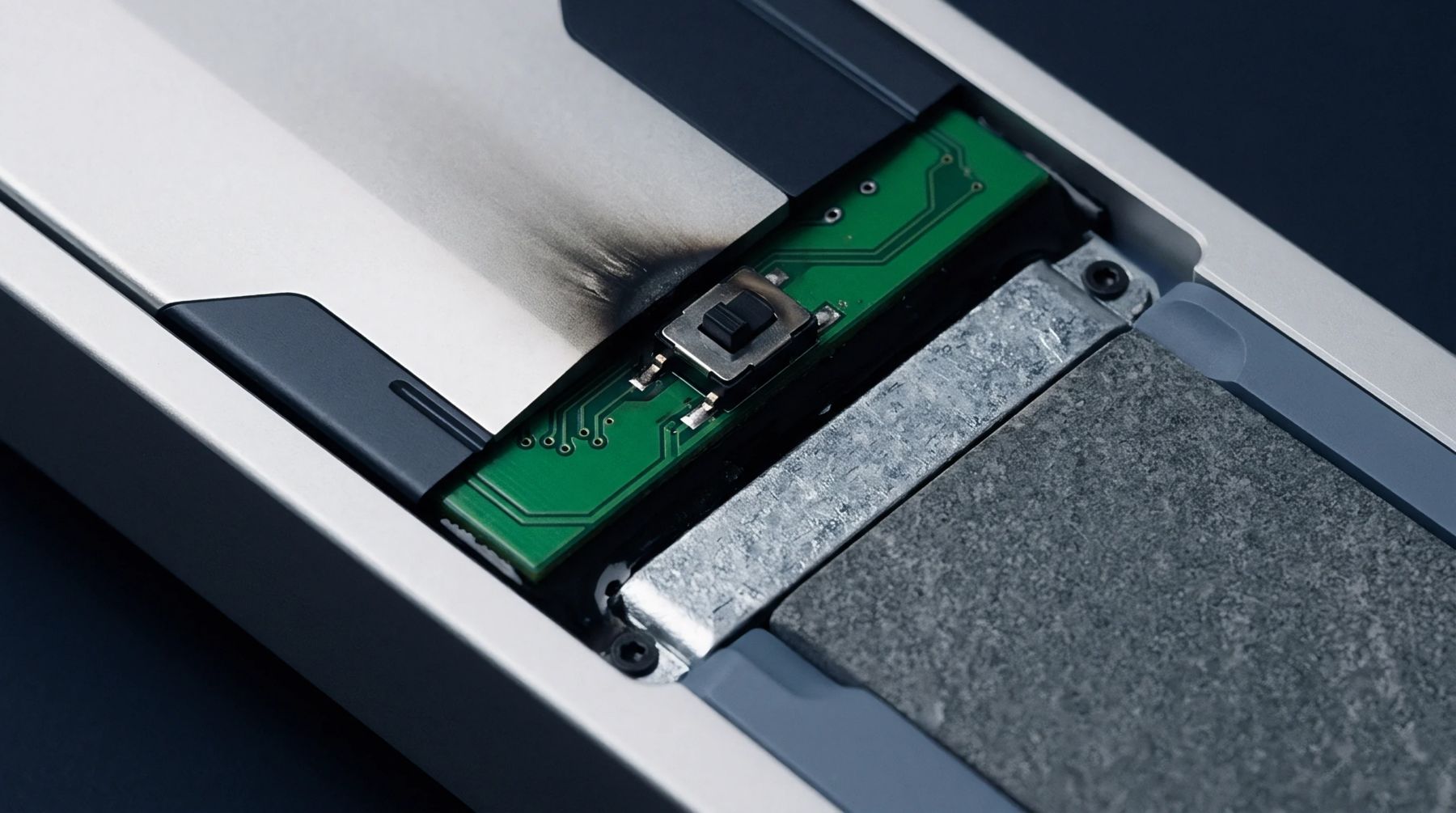
Dynamic impedance matching losses double RF current draw and accelerate battery internal resistance growth, cutting endpoint service life by over fifty percent.
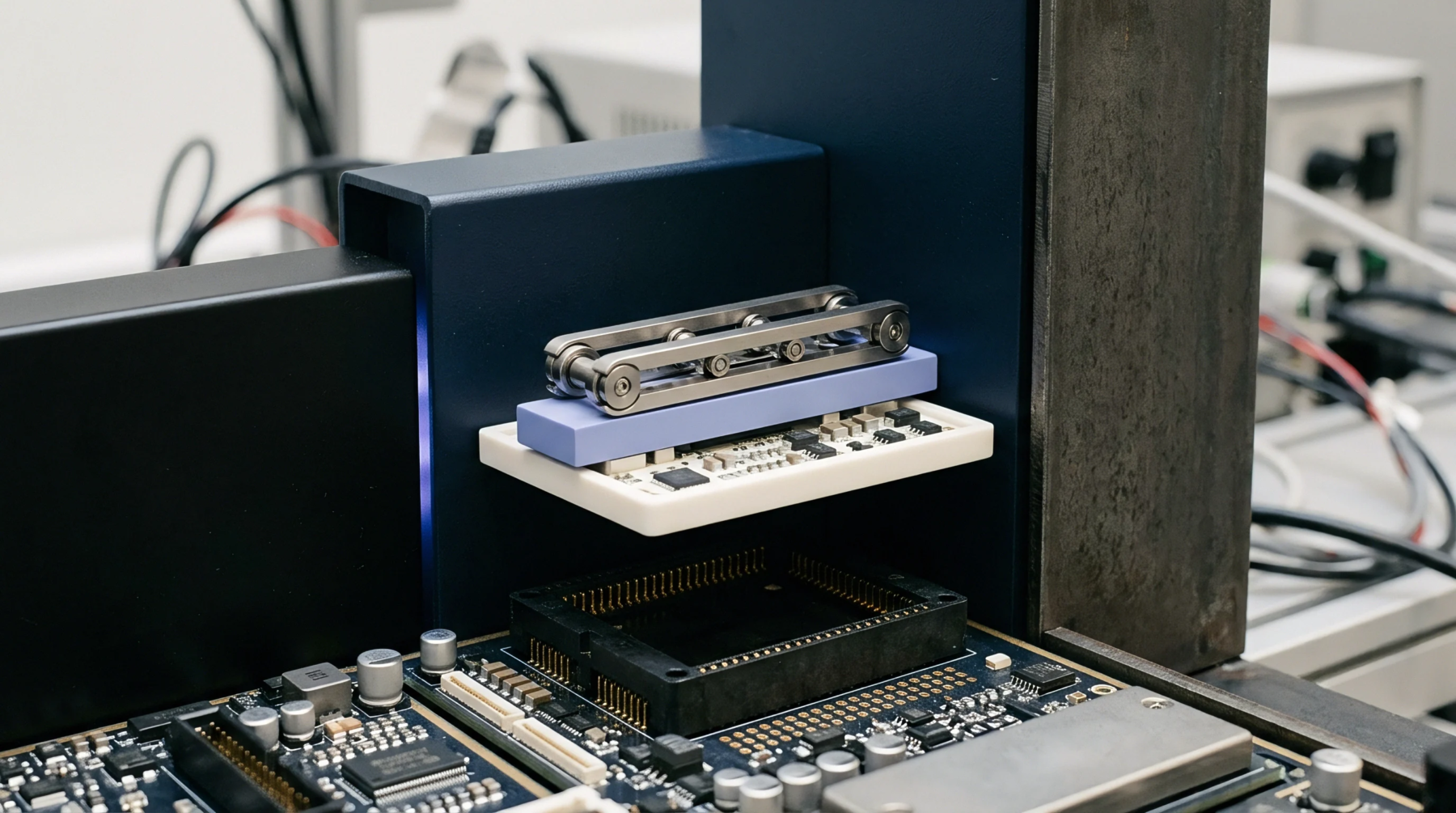
Automated inspection system acceptance hinges on partitioning sensor variance from part variance through rigorous gage repeatability and guardband verification.

Off-grid electronic label hardware root of trust selection balances microamp sleep currents, factory key injection speed, and radio modular approval limits.

Dynamic clear channel assessment optimizes Wi-Fi spatial reuse by elevating OBSS preamble thresholds while proportionally scaling transmit power to isolate co-channel cells.
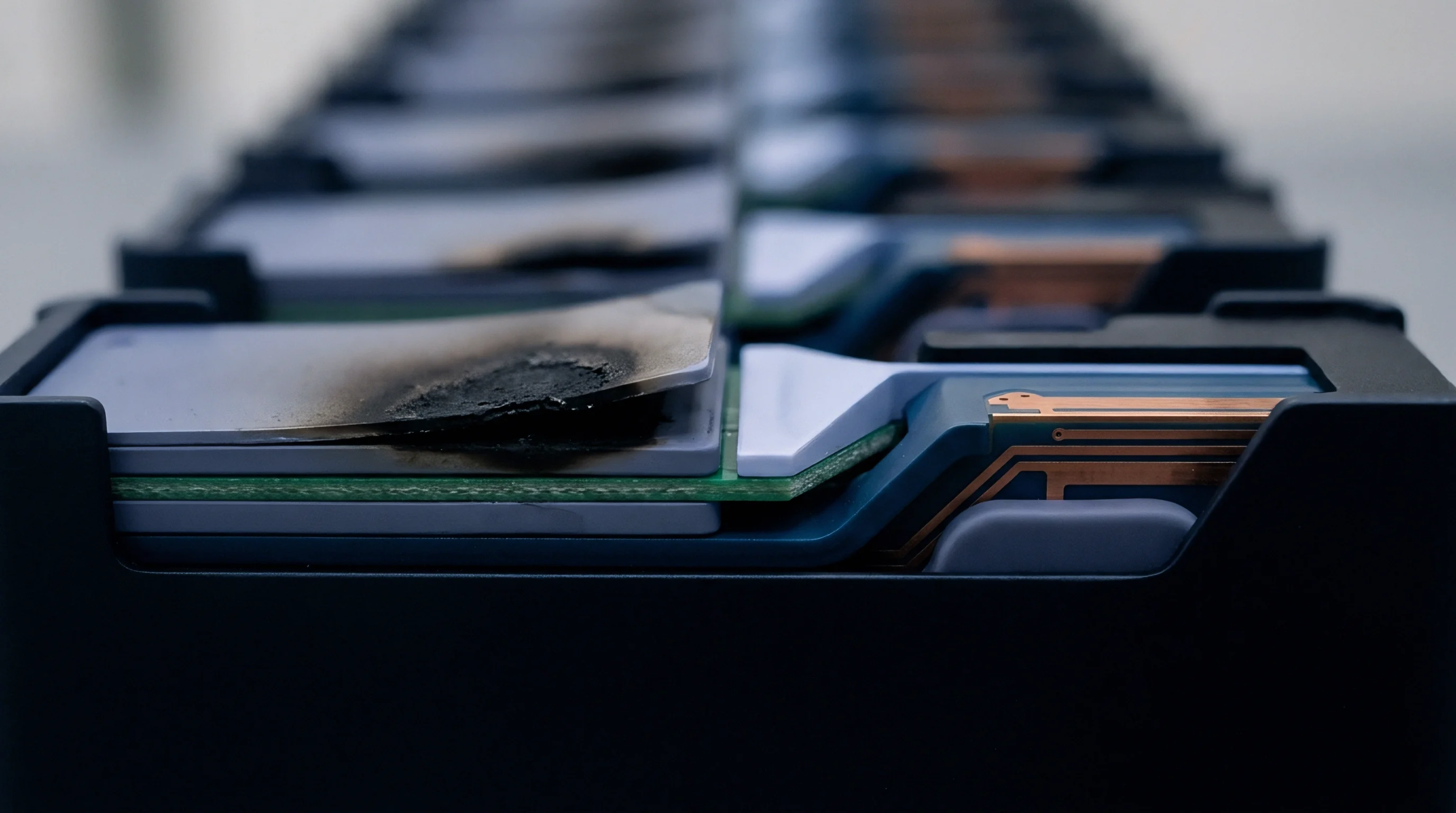
Resolving cellular hardware radiated margin loss requires isolating internal digital board noise and stabilizing multi-band antenna matching under real deployment conditions.

Internal RF coupling converts near-field reactive energy into unintended far-field emissions through enclosure seams, ground breaks, and unshielded host wiring.

Value design transfer packages by auditing native CAD and firmware source completeness against secondary bring-up friction and NPV returns.

Dual sourced wireless module manufacturing package files require synchronized substrate stackups and hardware sensing firmware to resolve binary divergence.

Atomic layer deposition passivation seals sub-GHz crystal blanks against pulse-induced gas desorption, maintaining clock stability and link margin.

Dynamic array field reconstruction must dynamically compensate for near field dielectric detuning to preserve link margin while verifying spatial exposure compliance.

Uncoupling engineering charges from unit component costs prevents perpetual margin penalties and secures design ownership for secondary factory transfers.

Multi-second cellular pulse trains deplete hybrid buffer capacitors and induce concentration polarization in subterranean primary cells, collapsing terminal voltage.

Deterministic register verification requires post-reset bitwise snapshotting, shadow register diffing, and strict bit-masking HAL drivers across multi-site handovers.

Handheld exposure filings demand unified 1g and 10g spatial SAR test plans, tight proximity sensor power backoff logic, and deterministic firmware controls.

Dual-function wireless assemblies require precise Harmonized System classification and synchronized telecommunications filings to prevent customs border holds.
Expertise is a utility, not a secret. sentiention™ publishes its working knowledge as open reference: intelligence layer covering the materials it sources, the markets it enters, and the reference that serves both.